
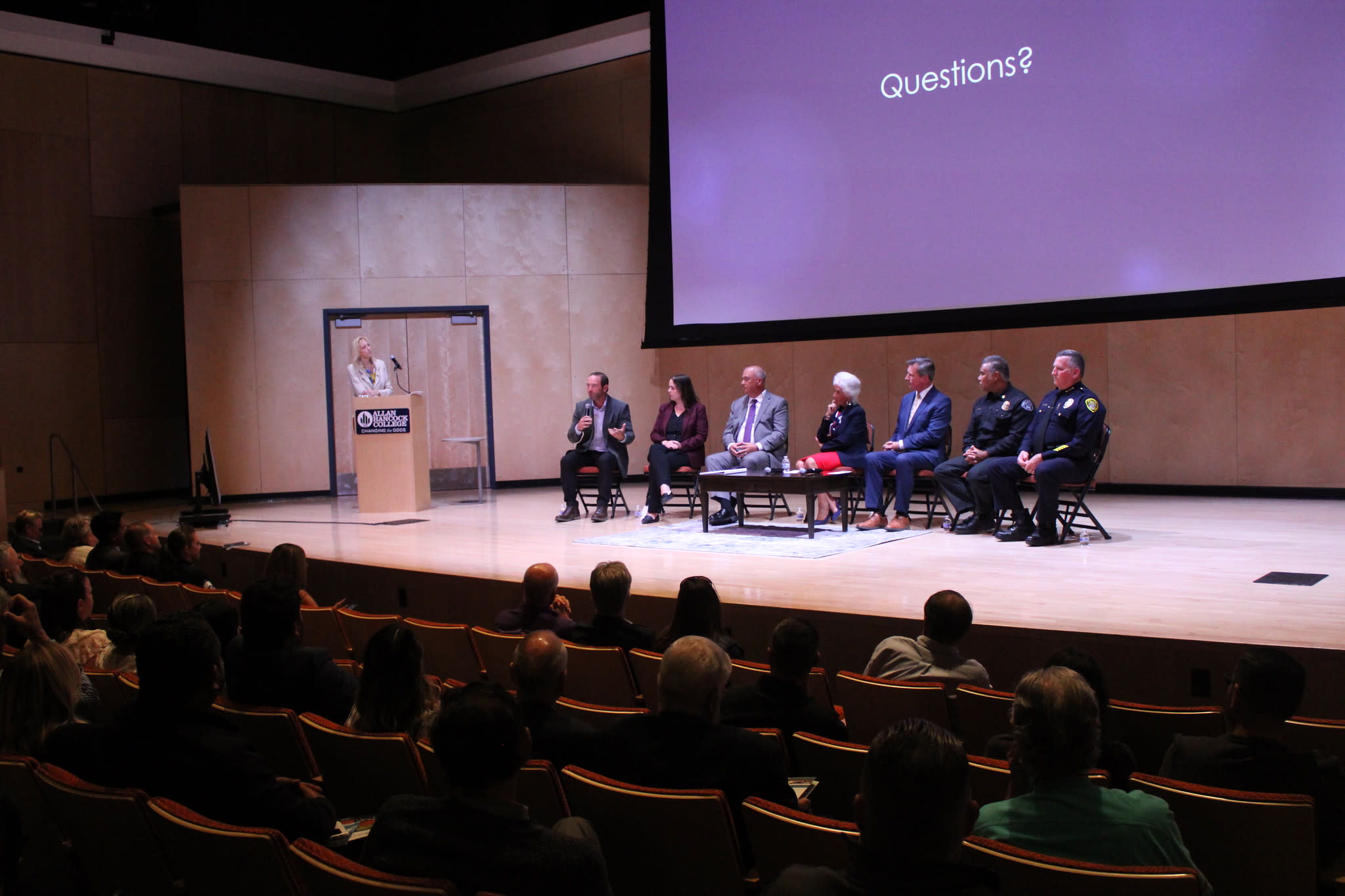
2026 State of the City: Your Questions, Answered
Thank you to everyone who sent in a question during this year’s State of the City. We ran out of time before we could get to all of them, so the City of Santa Maria has answered the rest in writing below.
Immigration Enforcement
Overall response to ICE-related questions
The City recognizes the concern and uncertainty that recent immigration enforcement activity has created for many residents and families. Our immigrant community is an important part of Santa Maria, and we want all residents to feel safe accessing City services, reporting crimes, and engaging with local government.
The City’s public safety policies comply with Senate Bill 54 (SB 54), the California Values Act, which limits the use of state and local law enforcement resources to assist with federal immigration enforcement, subject to certain exceptions. The Santa Maria Police Department does not enforce federal immigration laws and remains focused on protecting public safety, responding to crime, and serving our community.
We understand that fear of immigration enforcement may discourage residents from reporting crimes or seeking help. Public safety depends on trust, and we encourage all residents, regardless of immigration status, to contact the Police Department when they need assistance.
The City is committed to communicating clearly about residents’ rights, connecting families with trusted legal resources, and strengthening community partnerships. Residents can access information through the California Department of Justice’s Immigration Resources and Know Your Rights webpage.
Our goal is to ensure every resident feels respected, knows where to turn for help, and can participate in community life without fear of being overlooked or dismissed.
Measure C and the City Budget
Q: How can we be sure that we don’t end up in a similar budget deficit after Measure C passes? What processes have changed to ensure this?
The City has enacted stringent efforts to reduce costs, including the elimination of vacant positions, and reduction of hours of part-time staff. If Measure C passes, the City will ensure transparency and accountability, through the use of an oversight committee, independent audits and reports. With direction from the City Council, city staff will utilize best budgeting practices to ensure expenditures do not exceed revenues and take a conservative and strategic approach to budget allocations.
Q: The county has considered putting a half-cent sales tax on the ballot more than once in recent years. What happens if they decide to move forward?
If Measure C does not pass and the County subsequently moves forward with a half-cent sales tax, the City would have no control over how those funds are allocated or spent. As a result, Santa Maria residents may only see a small portion of the revenue generated from the sales tax within our community, with the majority potentially directed to other areas or countywide priorities. This could limit the direct benefits to Santa Maria residents, despite their contributions through local sales tax. Measure C provides an opportunity to keep funding decisions closer to home and better ensure that local revenue addresses Santa Maria’s specific needs, priorities, and essential services.
Growth, Development and Housing
Q: What can Santa Barbara learn about growth and development from Santa Maria?
Growth and development should reflect the vision, goals and priorities of the community.
Q: What is the city doing about all the issues with ADUs in neighborhoods where parking is now a major issue? Will the city build houses for middle class folks — not low income or 55 and over or extremely expensive housing?
State law requires that cities allow for the development of accessory dwelling units (ADUs) in single-family neighborhoods. These ADUs can be constructed largely without the provision of additional parking on the property. The City recognizes the neighborhood impacts that new ADUs create, including parking constraints. There are no easy solutions to this, however, the City can work with neighborhood residents to consider implementing a parking permit program.
The City’s plan for housing includes the full range of housing types. Note that the City does not build housing, nor control the prices of housing, but will facilitate the review process, as developers propose housing on private property. Recently, many apartments and ADUs have been built. Many of these are rented out at market rate prices. A few apartments are deed-restricted affordable housing, such as Sierra Sands. The City hopes that as new housing developments are constructed, that they can meet the needs of all households, including middle-income households.
Homelessness and Public Safety
Q: Regarding our homelessness issue — what are the biggest challenges for our public safety agencies and what is needed to help mitigate the issues that come with the transient population?
Homelessness is a complex social and community issue. Our City public safety officers strive to keep our neighborhoods safe, and this includes efforts to minimize encampments on city streets and private property. We recognize that those experiencing homelessness may also have other challenges, which may include and are not limited to housing, employment, physical and mental health, and substance abuse/addiction. Addressing these challenges requires the assistance of outreach coordinators and other service providers.
Community Partners
Q: What role do community organizations such as the YMCA play in the growth and future of the City of Santa Maria?
Community organizations such as the YMCA play a vital role in providing additional services and programs to serve our residents, including our youth.